
The story of Residenza Pigna
Palazzo Berardi
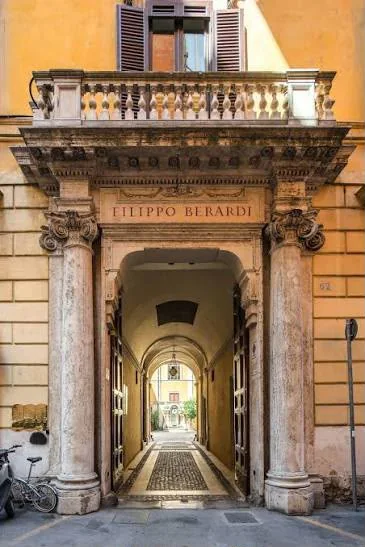
Residenza Pigna is set in Palazzo Berardi, on Via del Gesù. The palace was built in 1565 as the residence of the Muti family, to a design attributed to Giacomo Della Porta. In 1701, when Teresa Muti married Federico Cesi, it passed to the Cesi family.
Early in the nineteenth century the palace was bought by the Berardi, who in the second half of the century had it restored by the architect Pio Piacentini. On Via del Gesù, two windows of the original sixteenth-century façade survive, together with the rusticated portal.
The Courtyard Clock
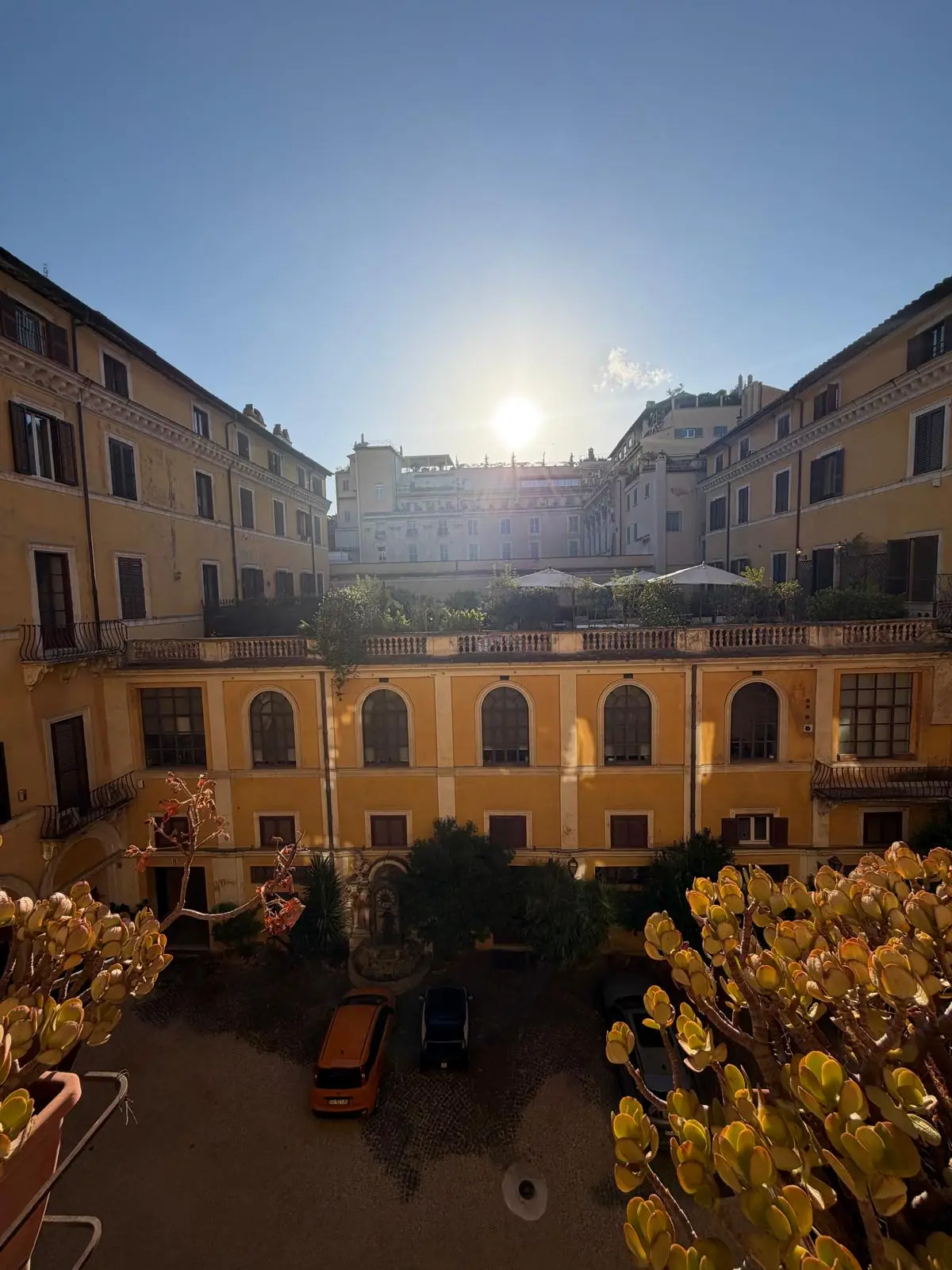
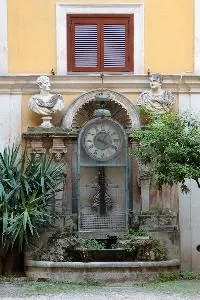
In the courtyard stands a water clock, or hydrochronometer, built in 1870 by the Dominican friar Giovan Battista Embriaco, prior of the nearby convent of the Minerva, who also made the water clock on the Pincio. It is set before a marble shell niche, above a small fountain with two basins.
Named after a bronze pine cone
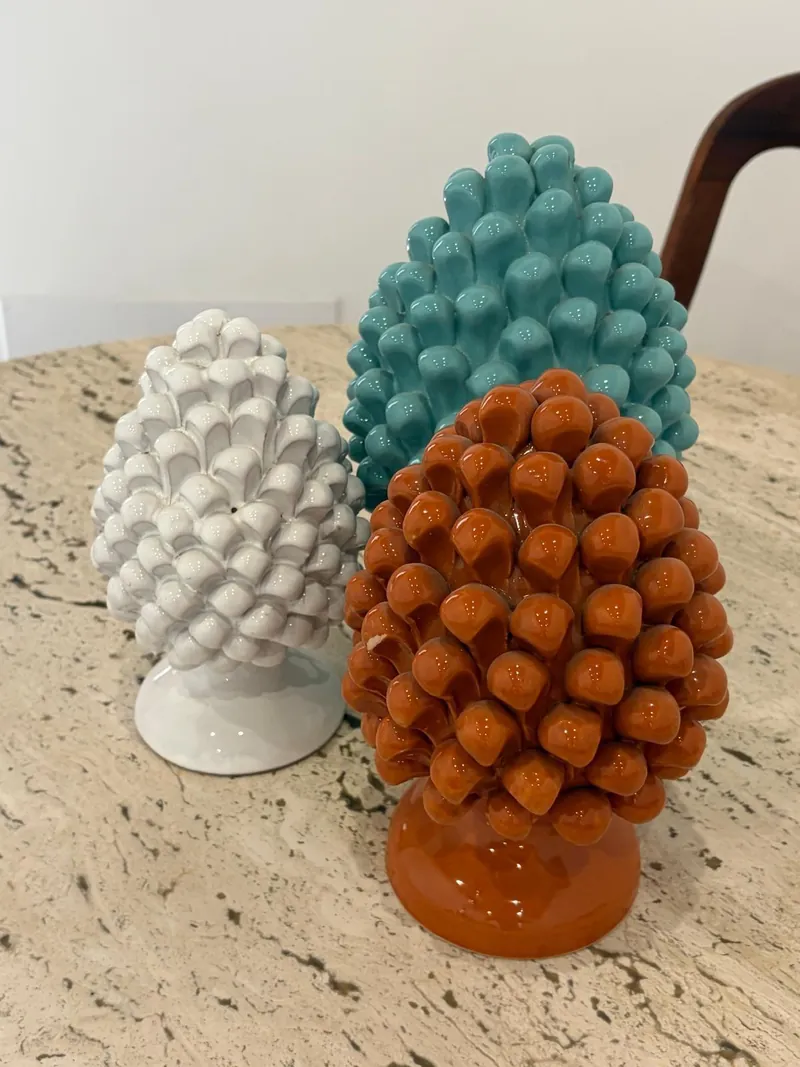
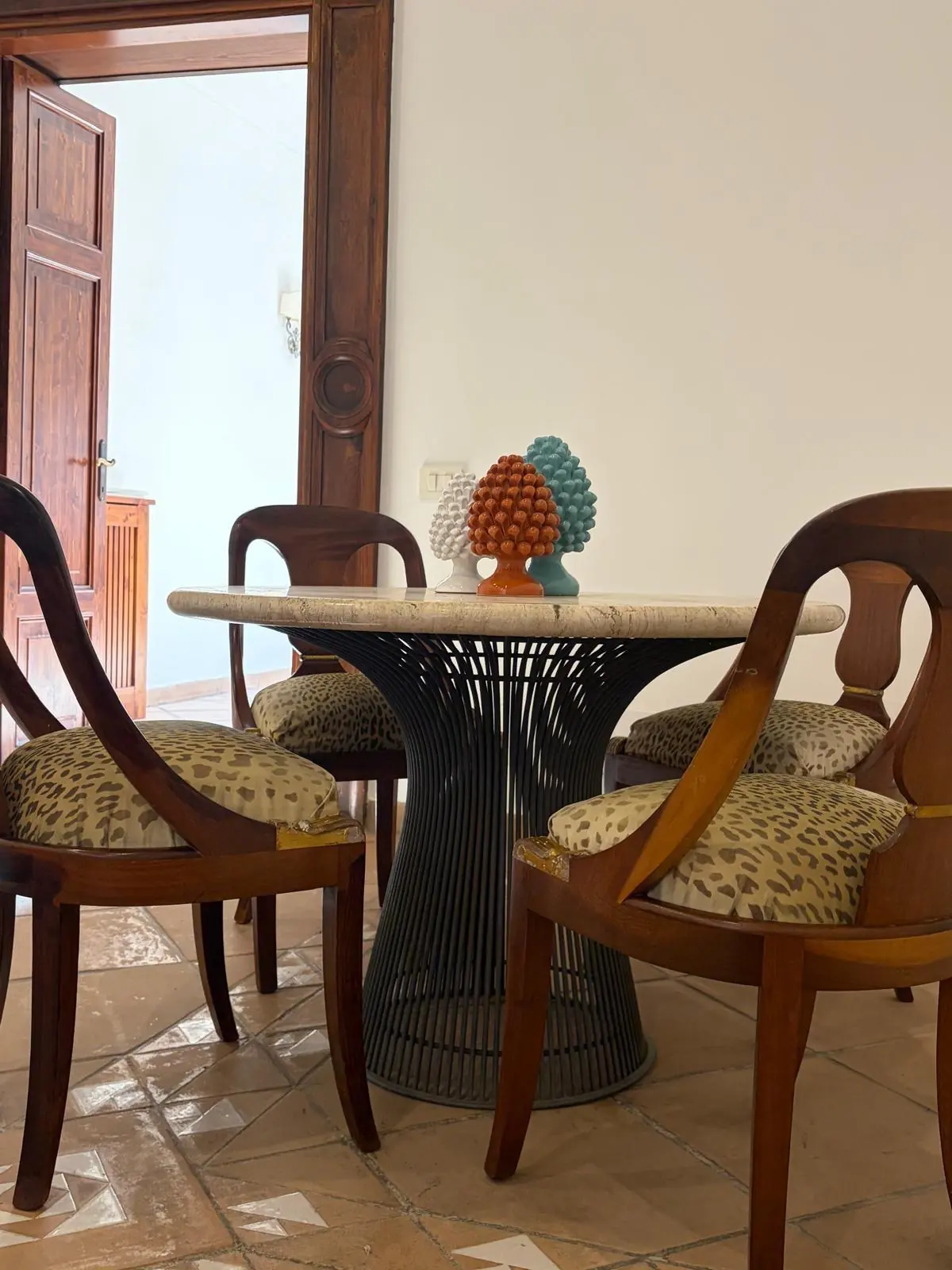
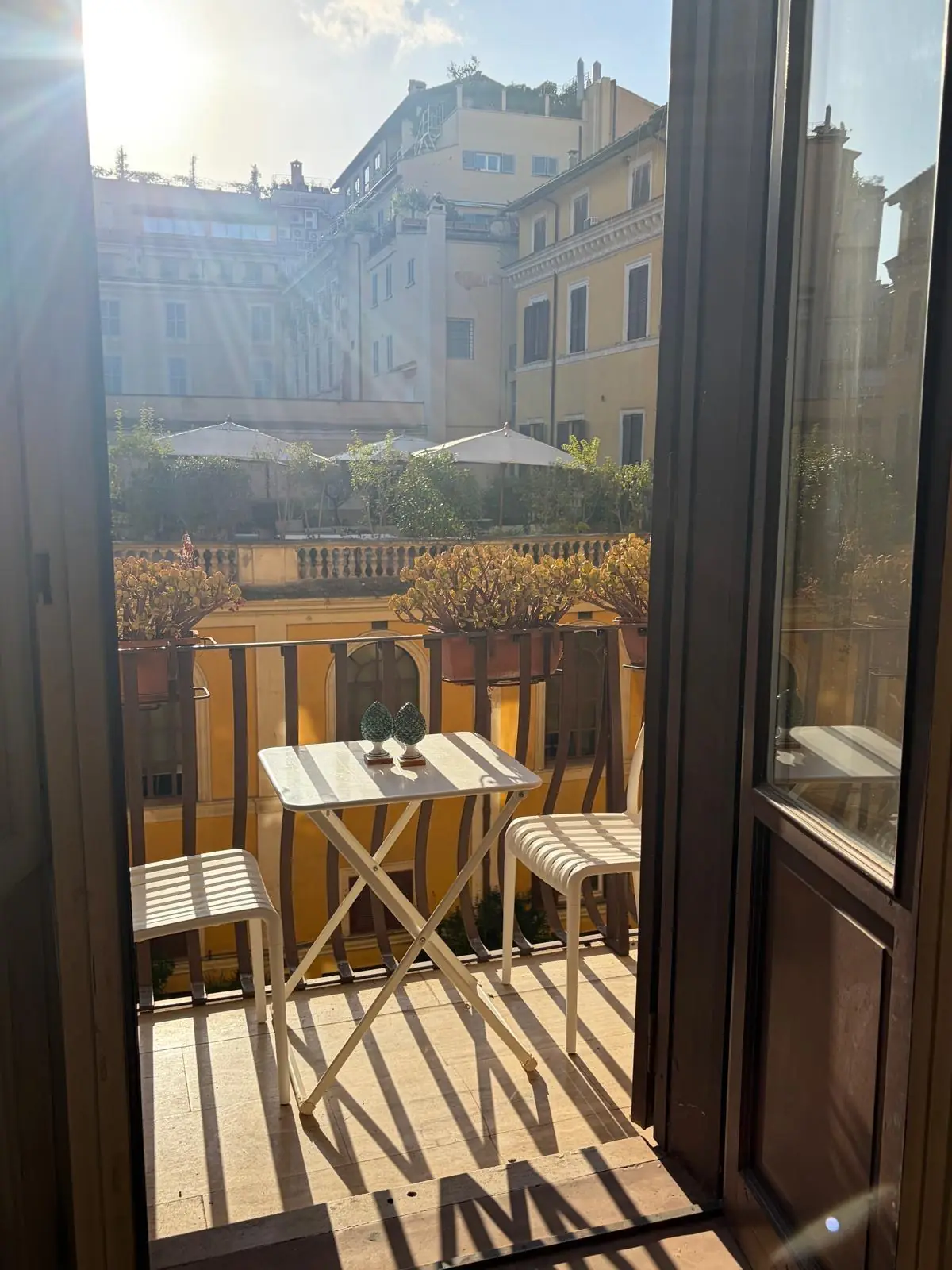
The Rione Pigna takes its name from the Pigna, a colossal bronze pine cone from ancient Rome that once stood in this part of the city and today presides over the Cortile della Pigna in the Vatican. The same pine cone is the emblem of our residence, and ceramic pine cones appear throughout the house.

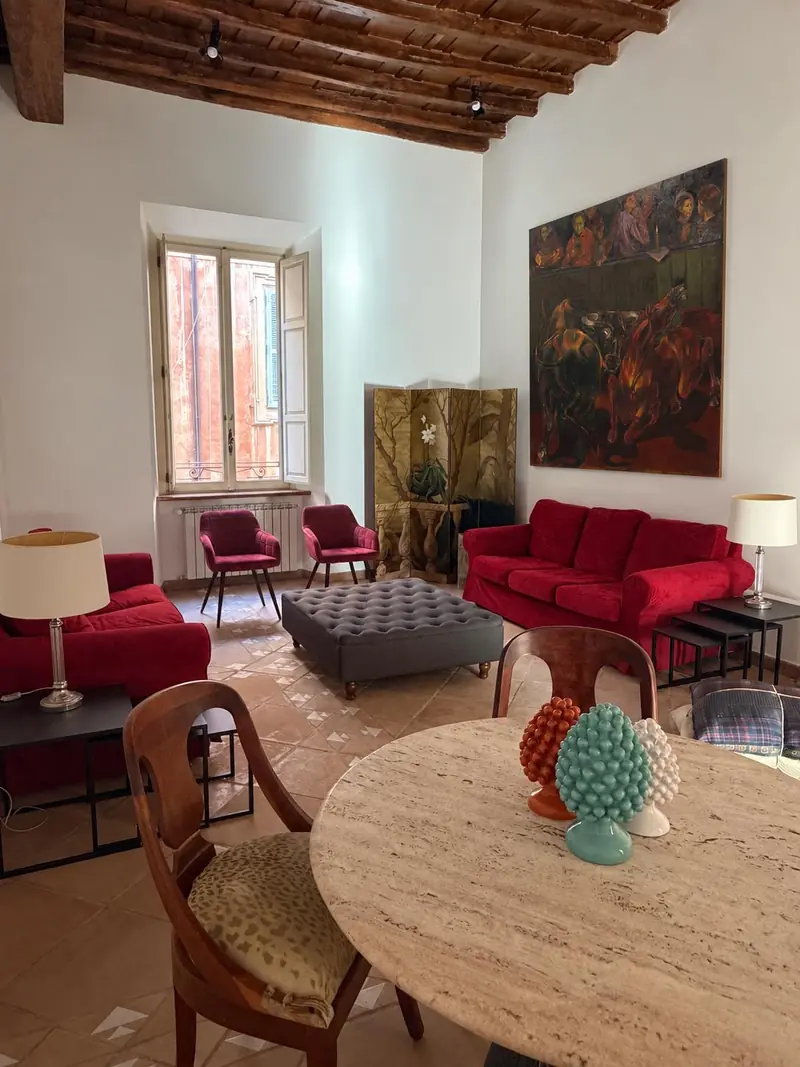
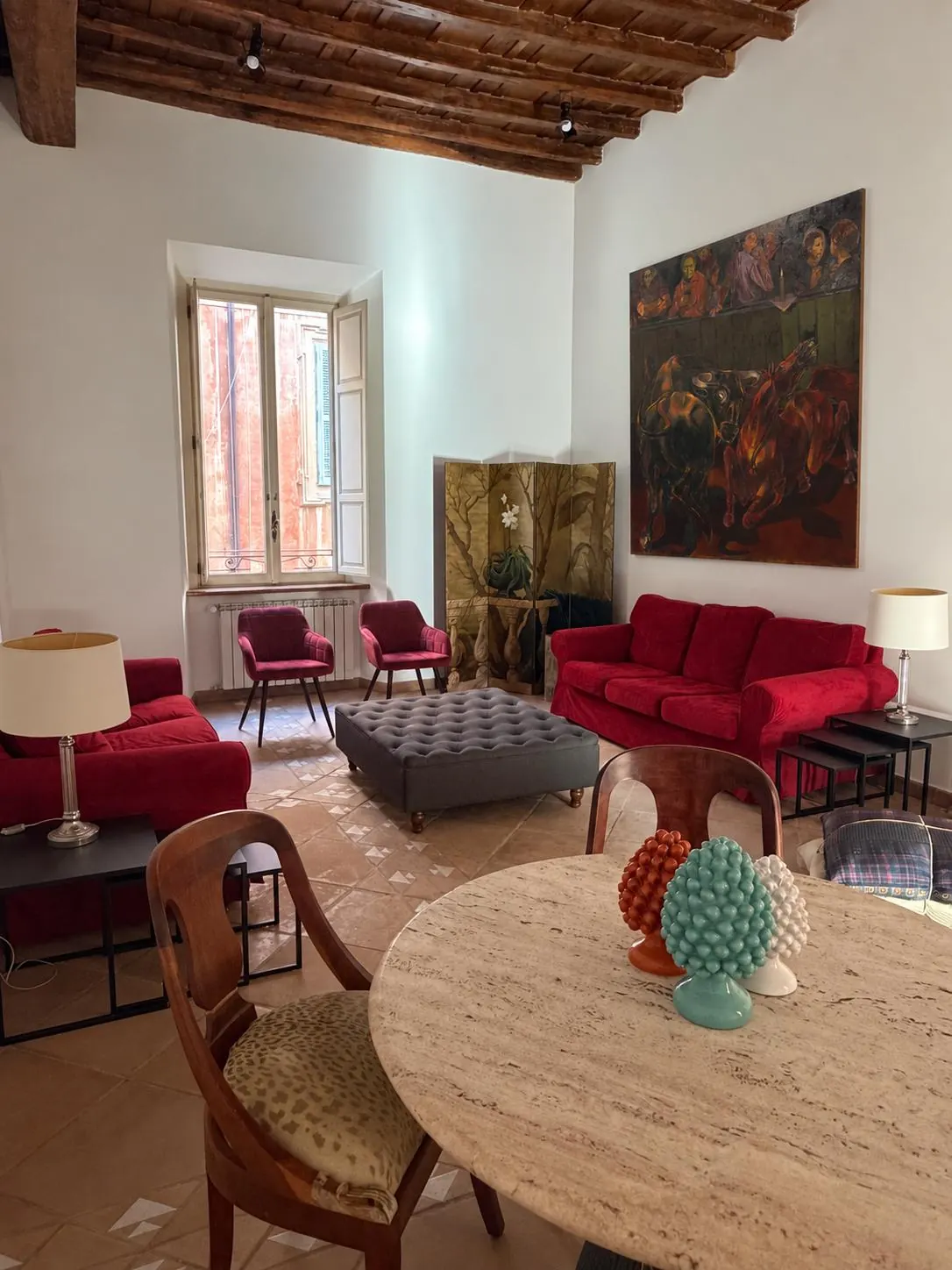
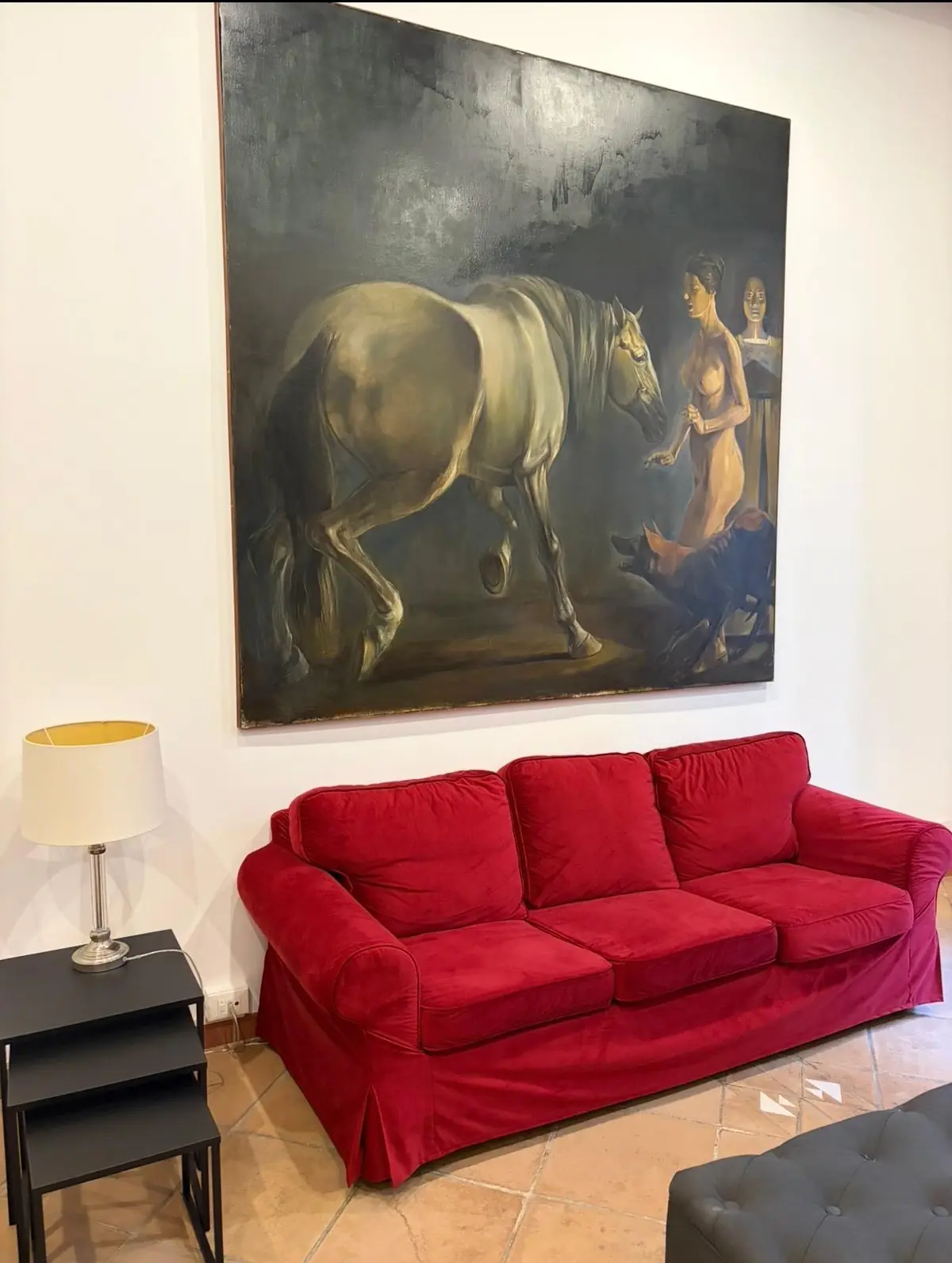
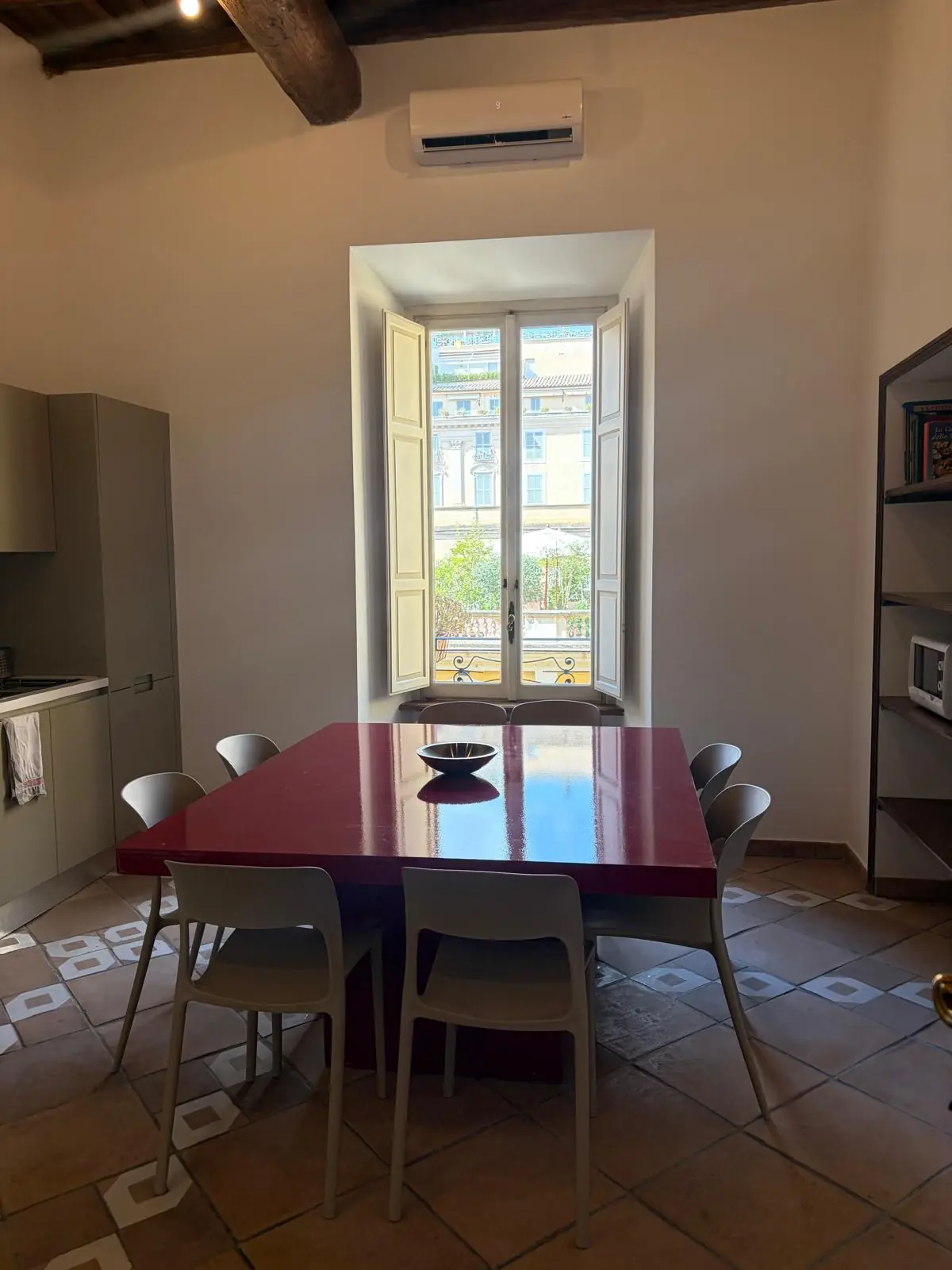
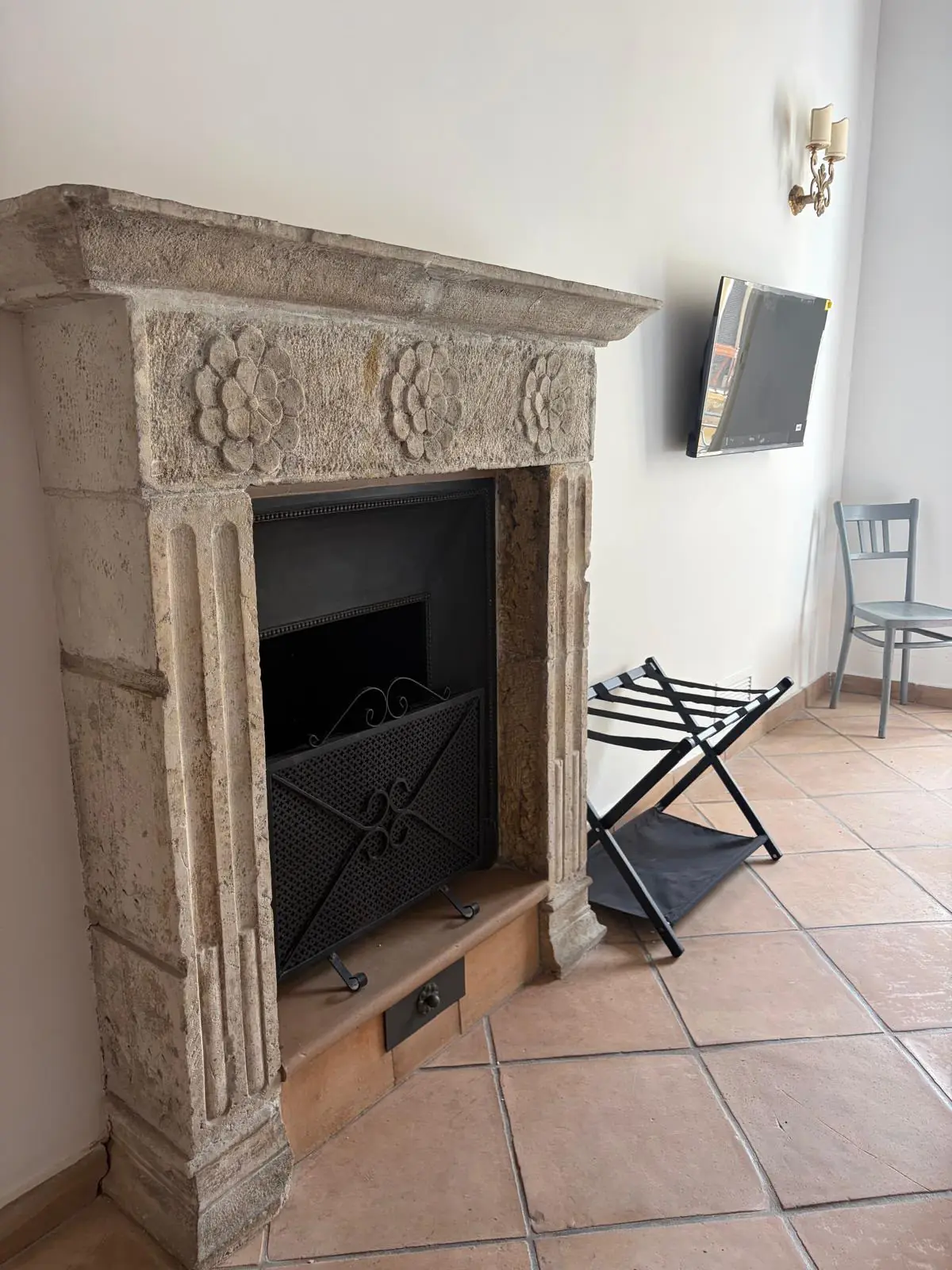
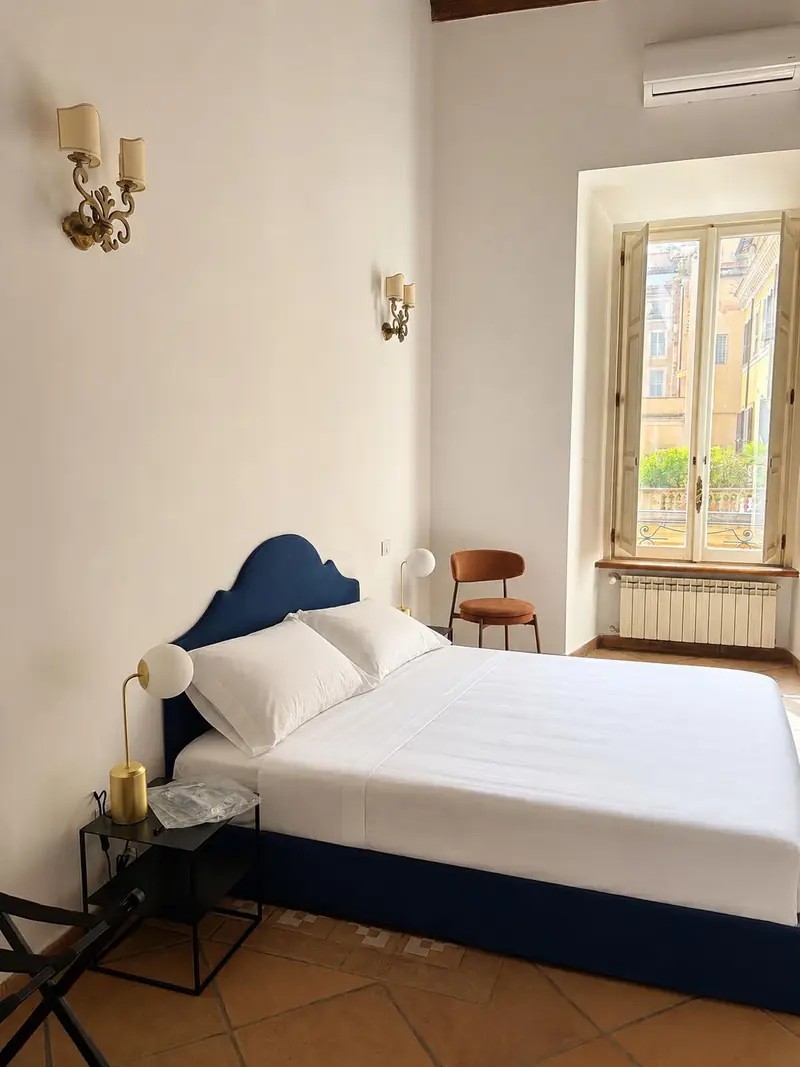
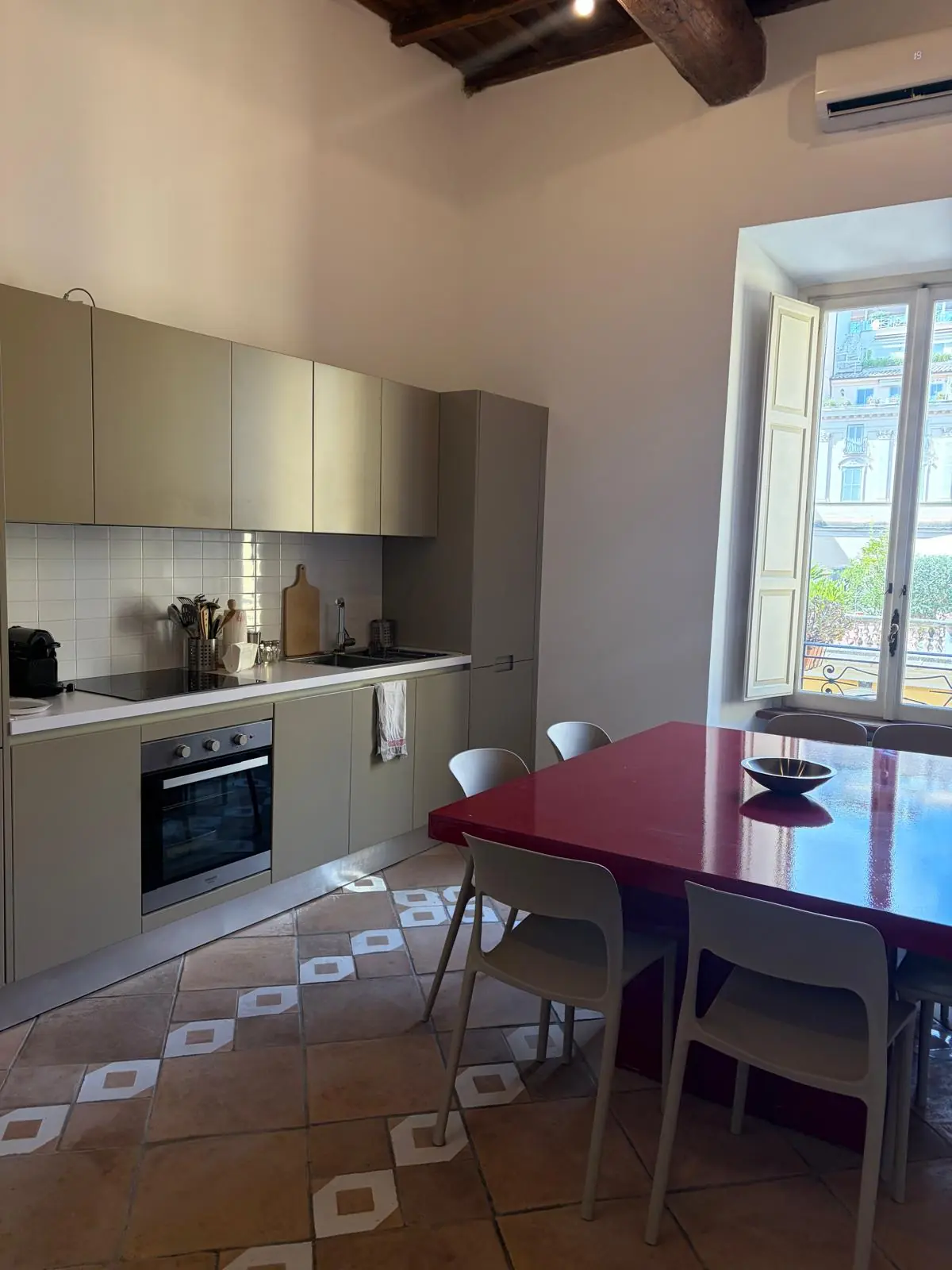
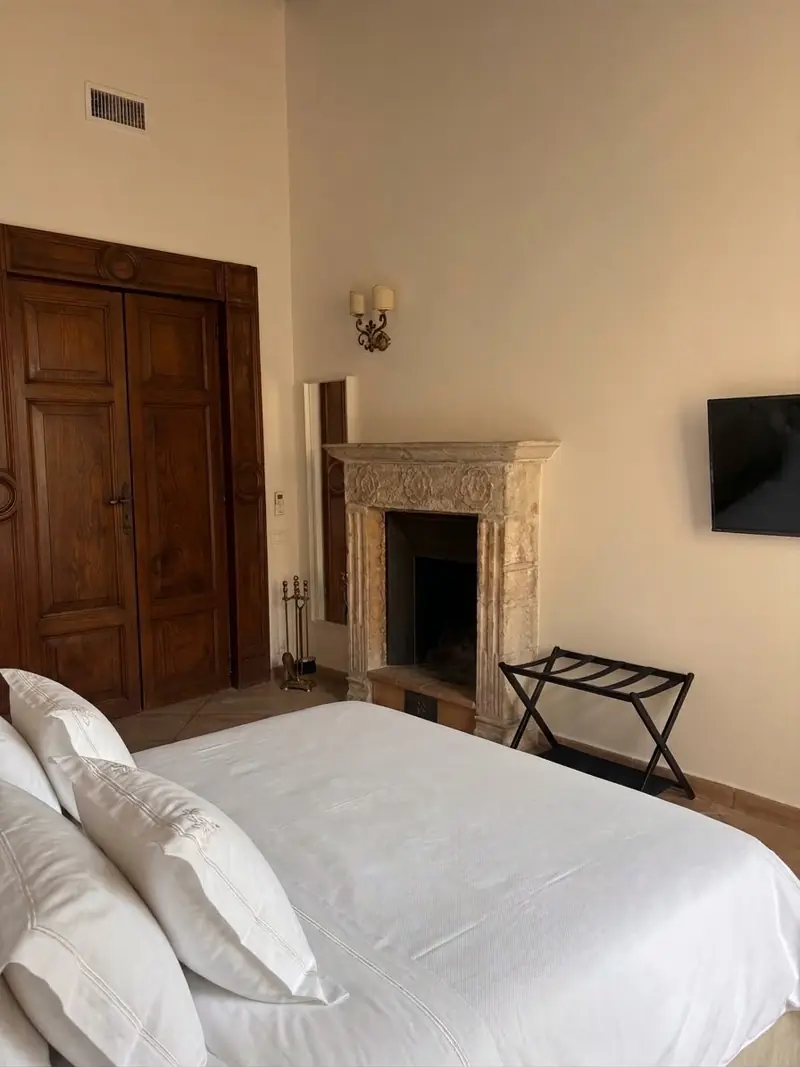
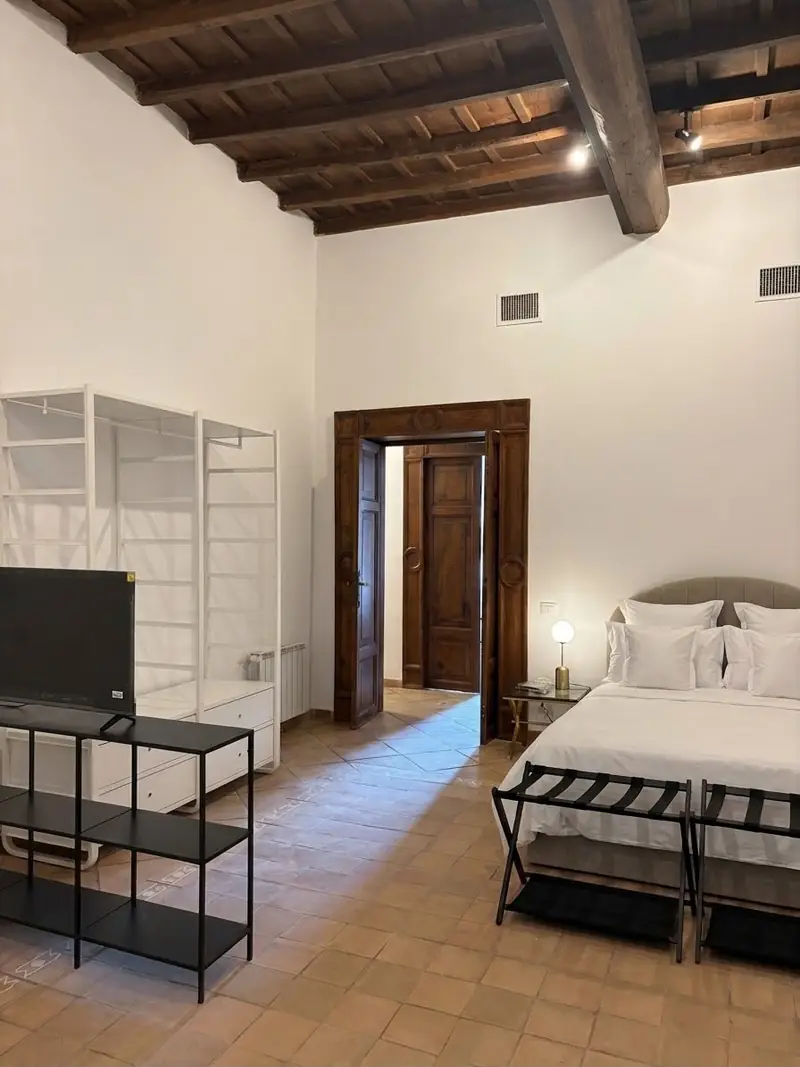
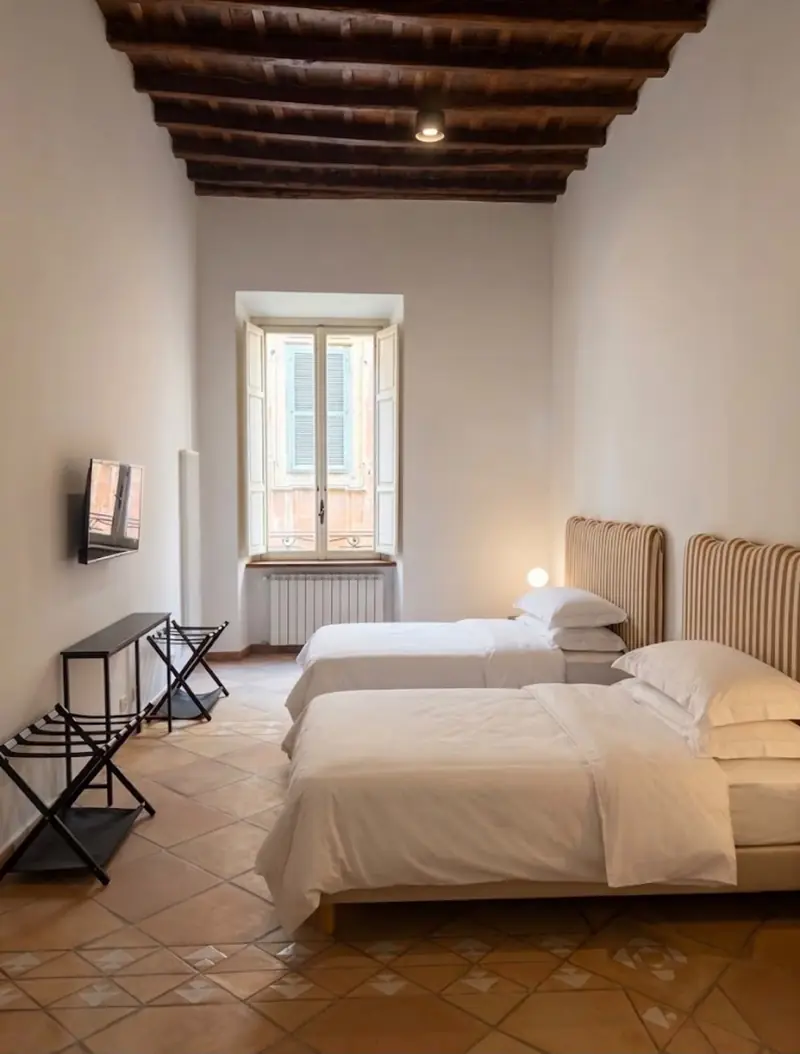
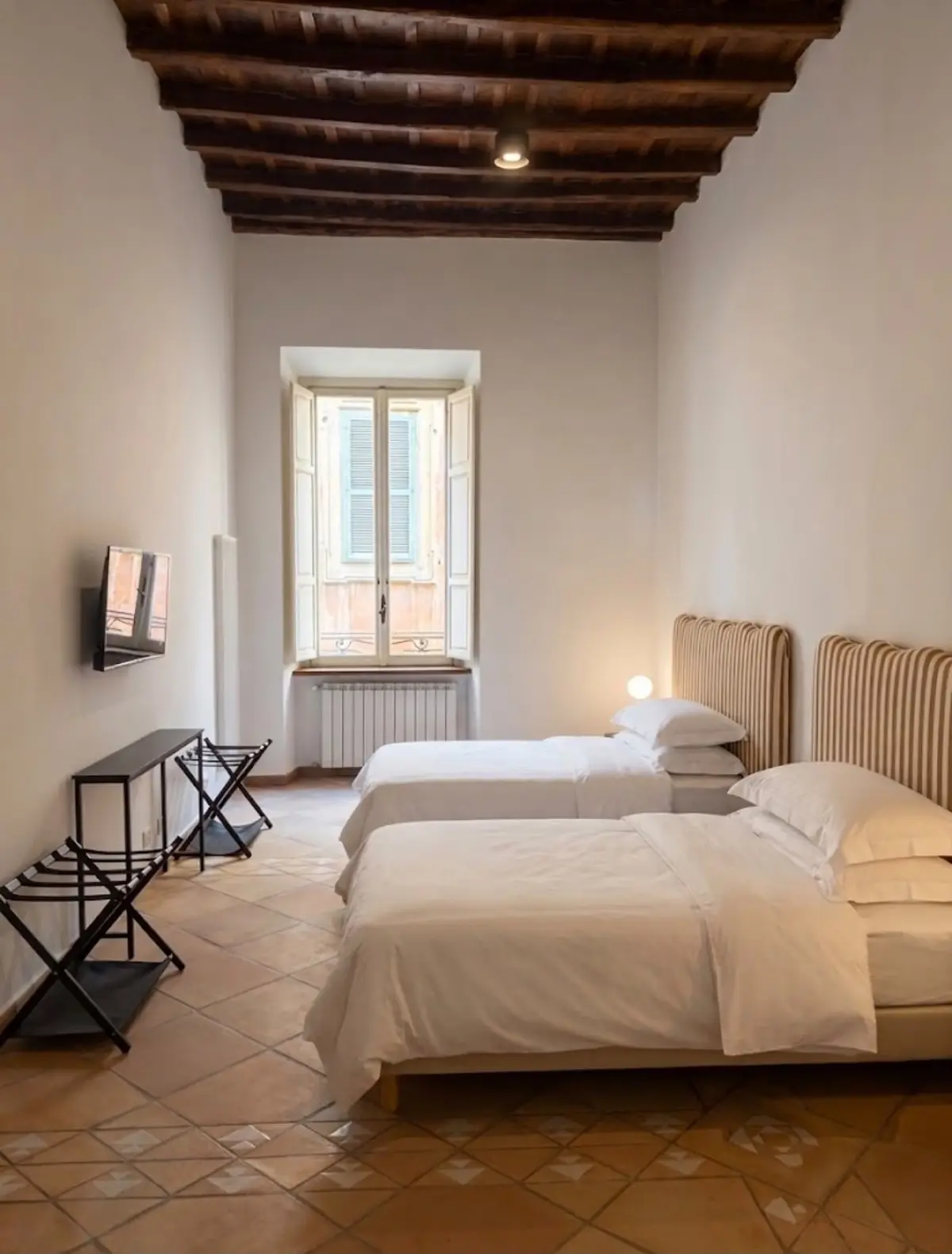
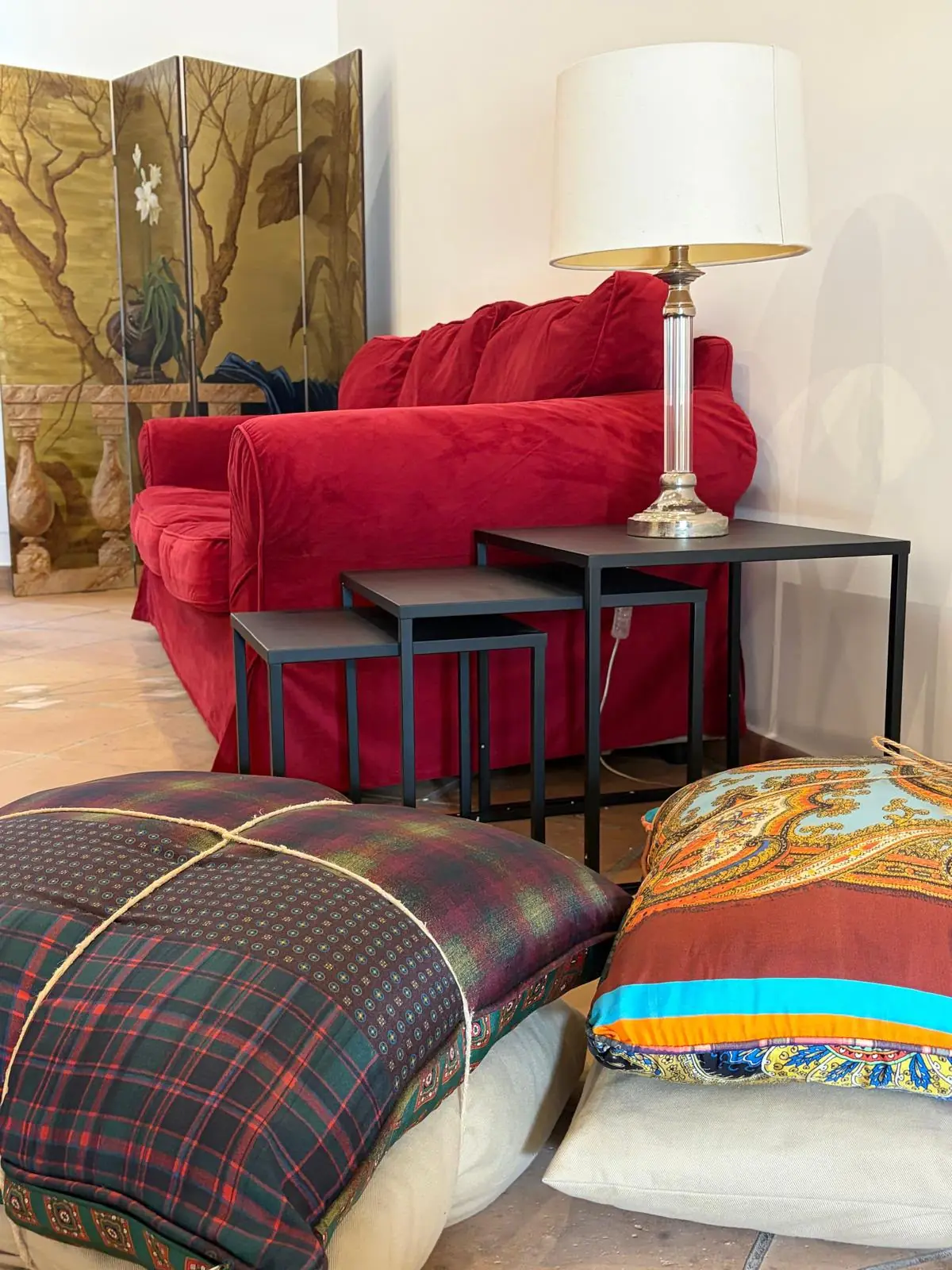
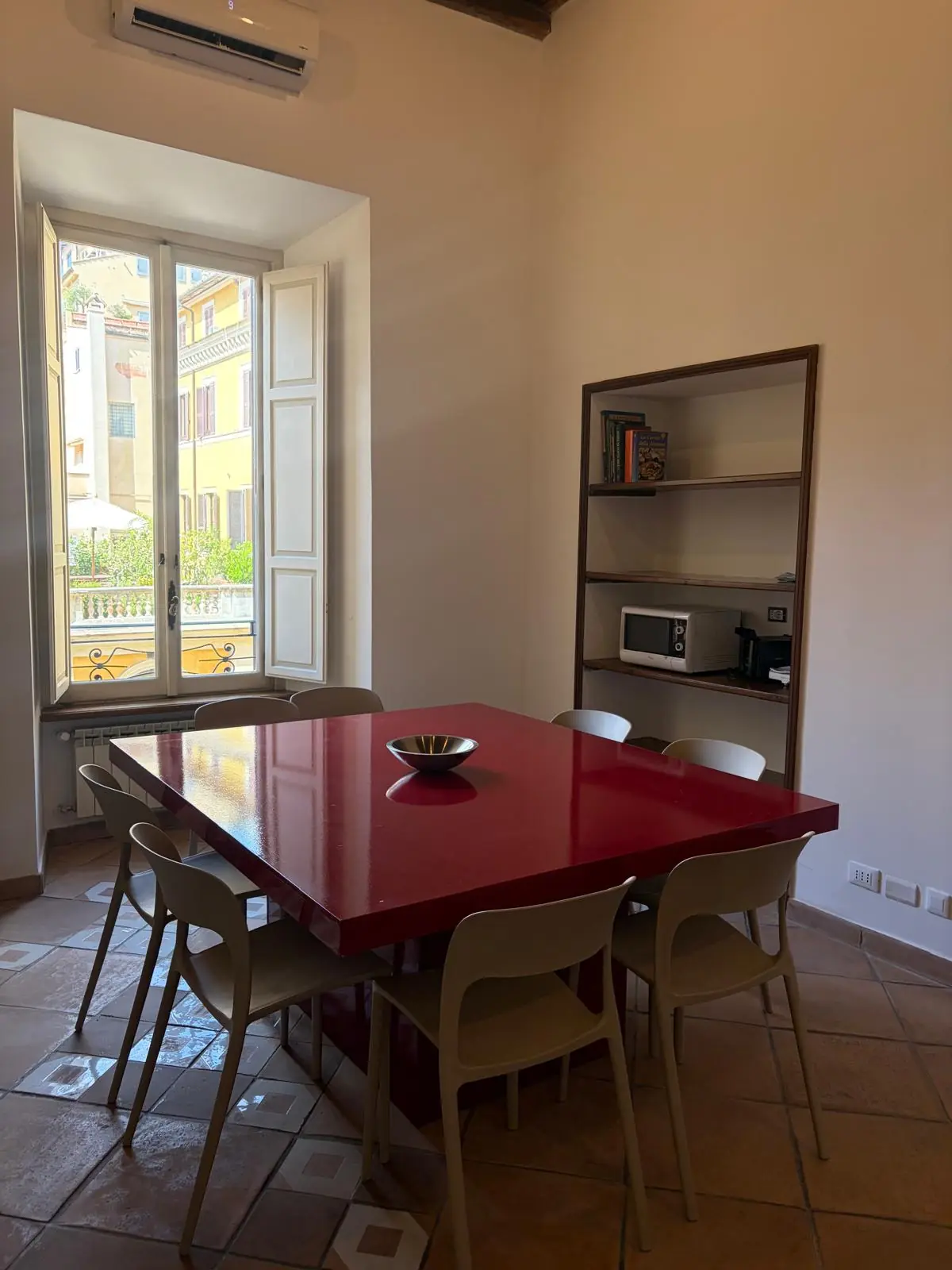
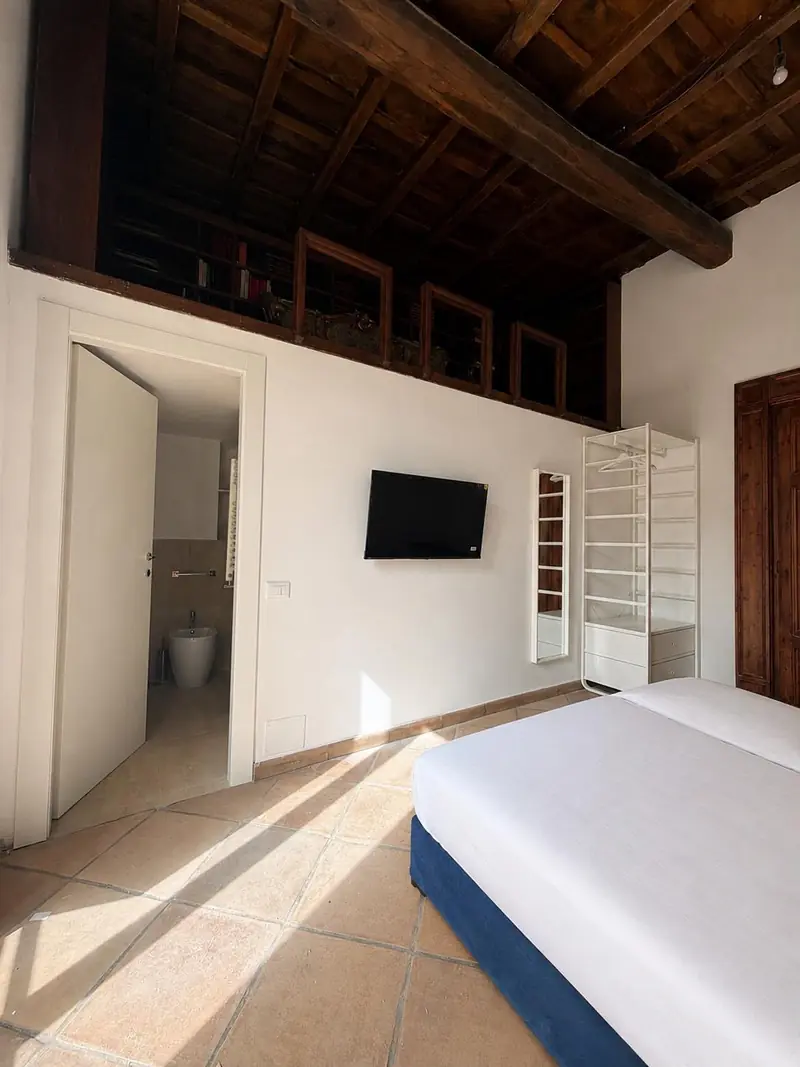
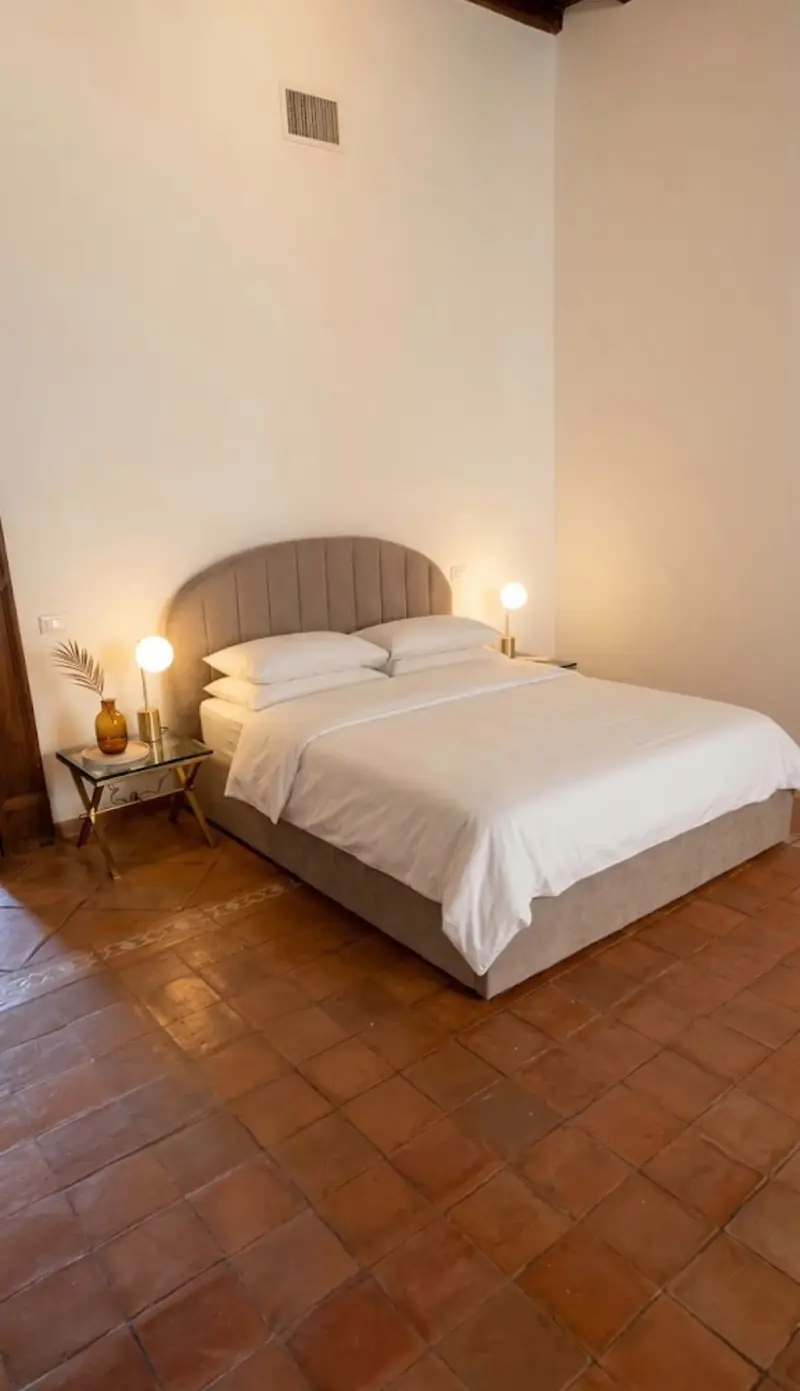
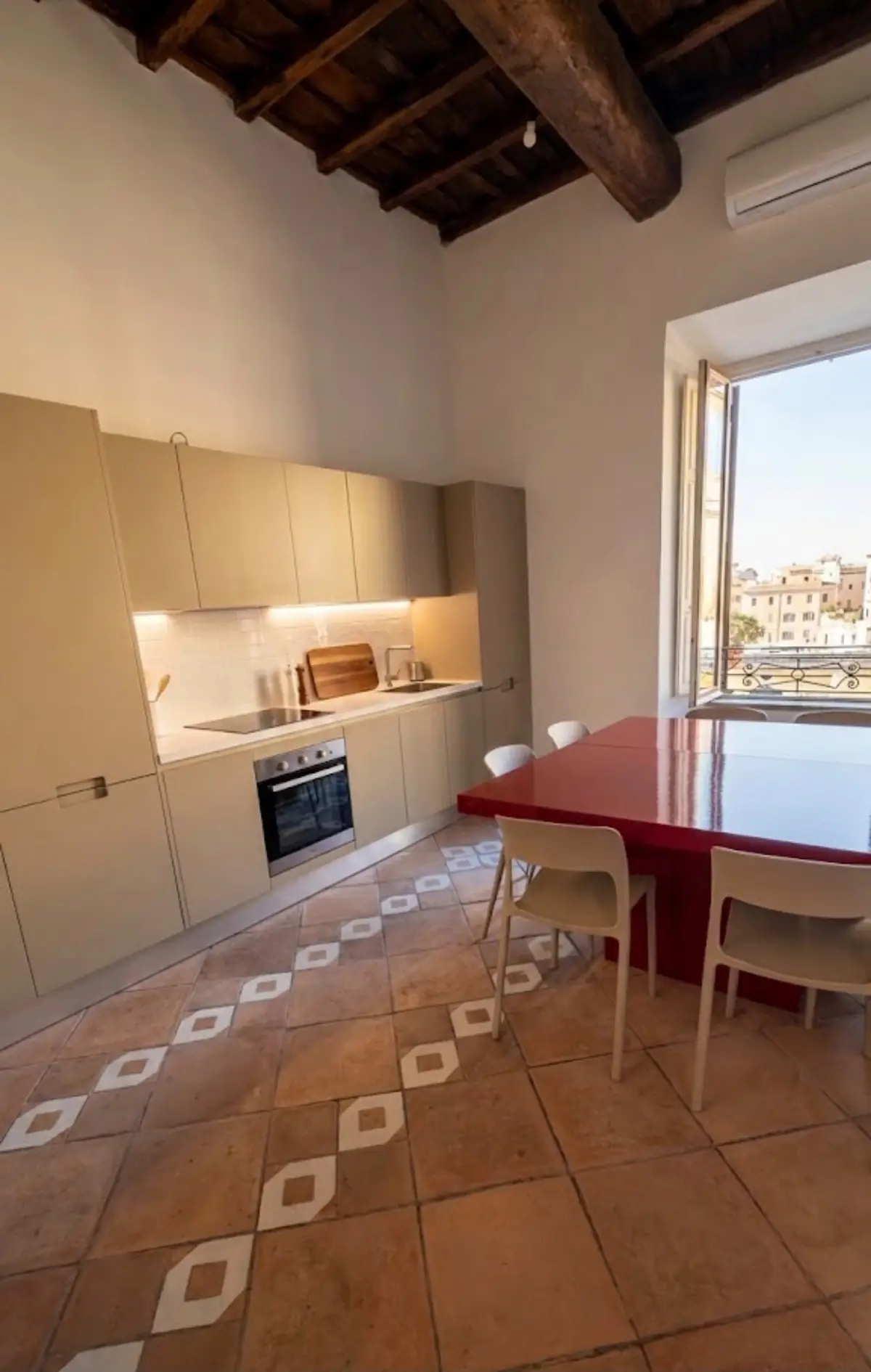
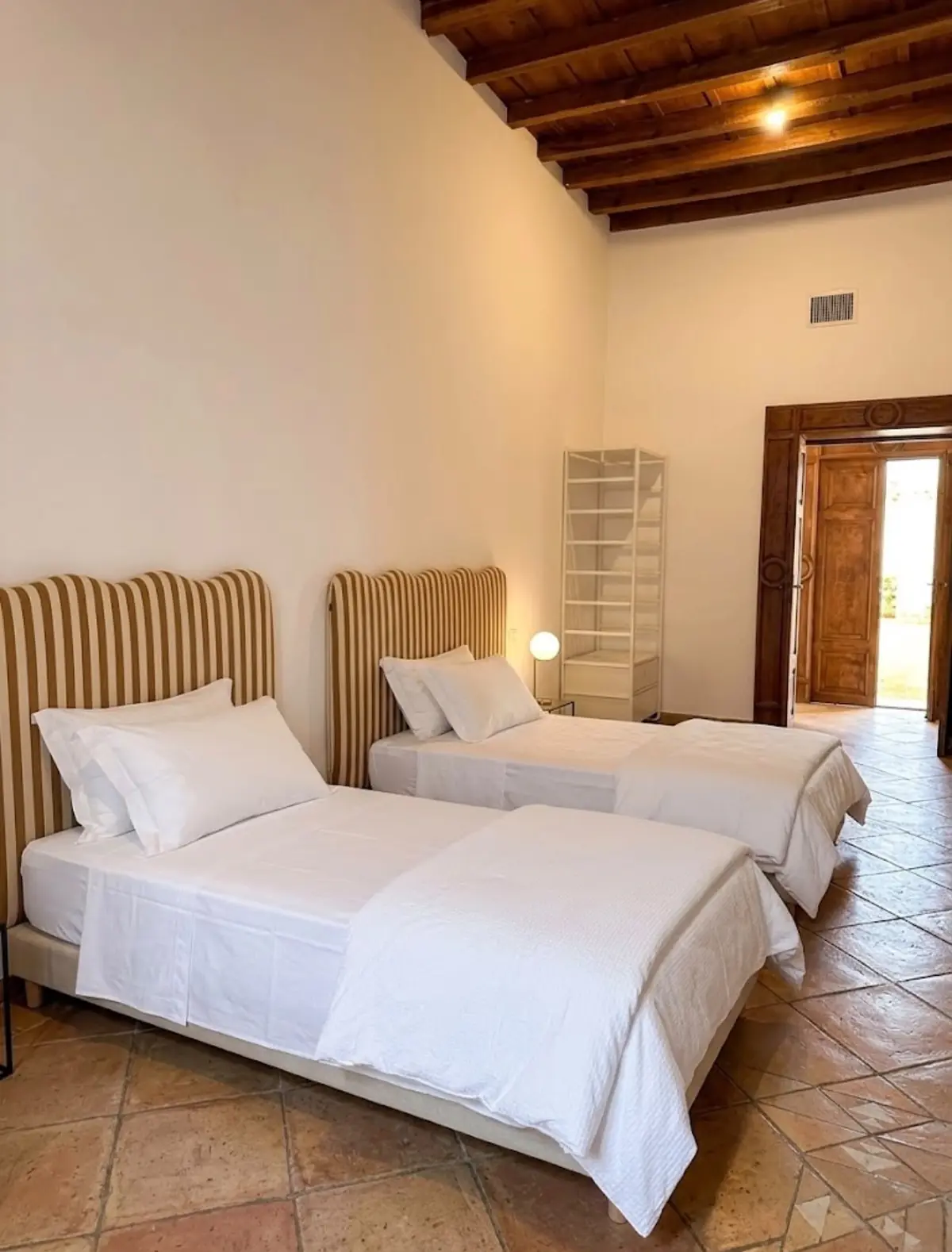
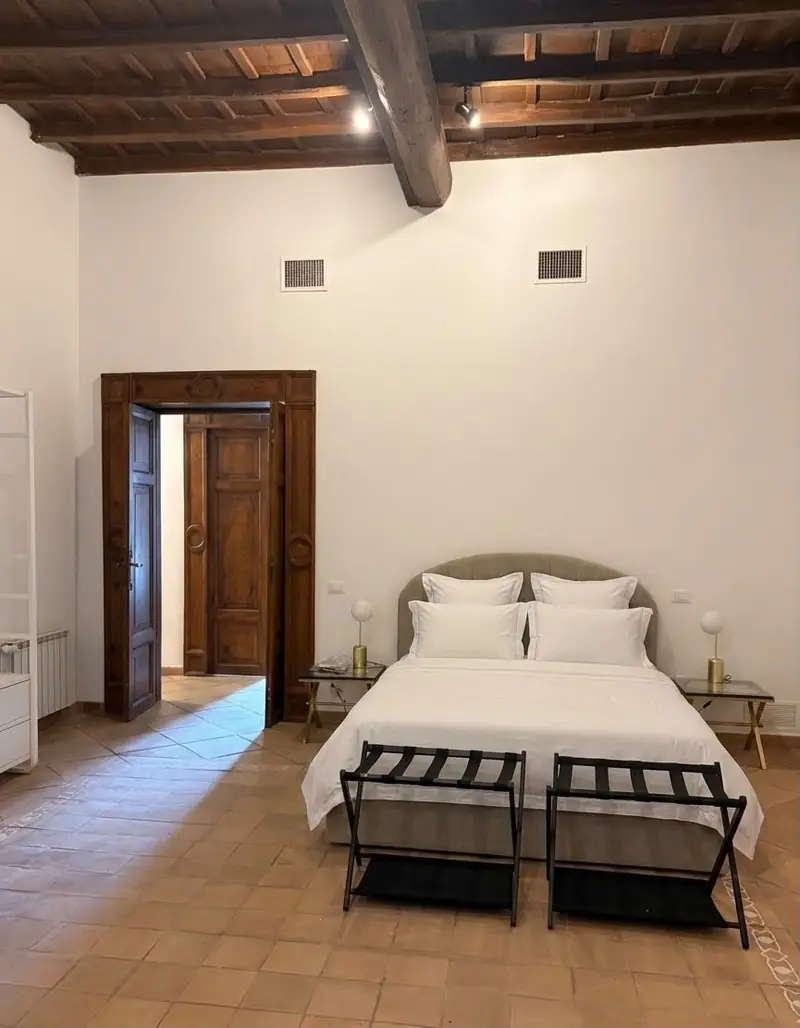
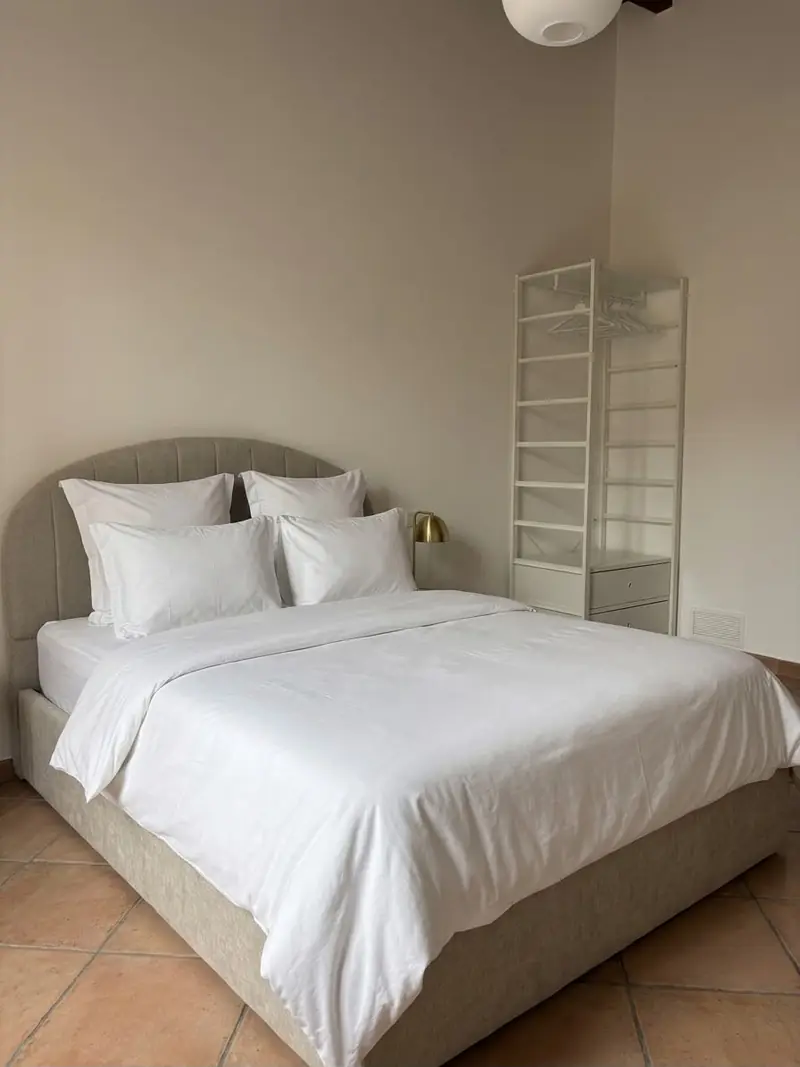
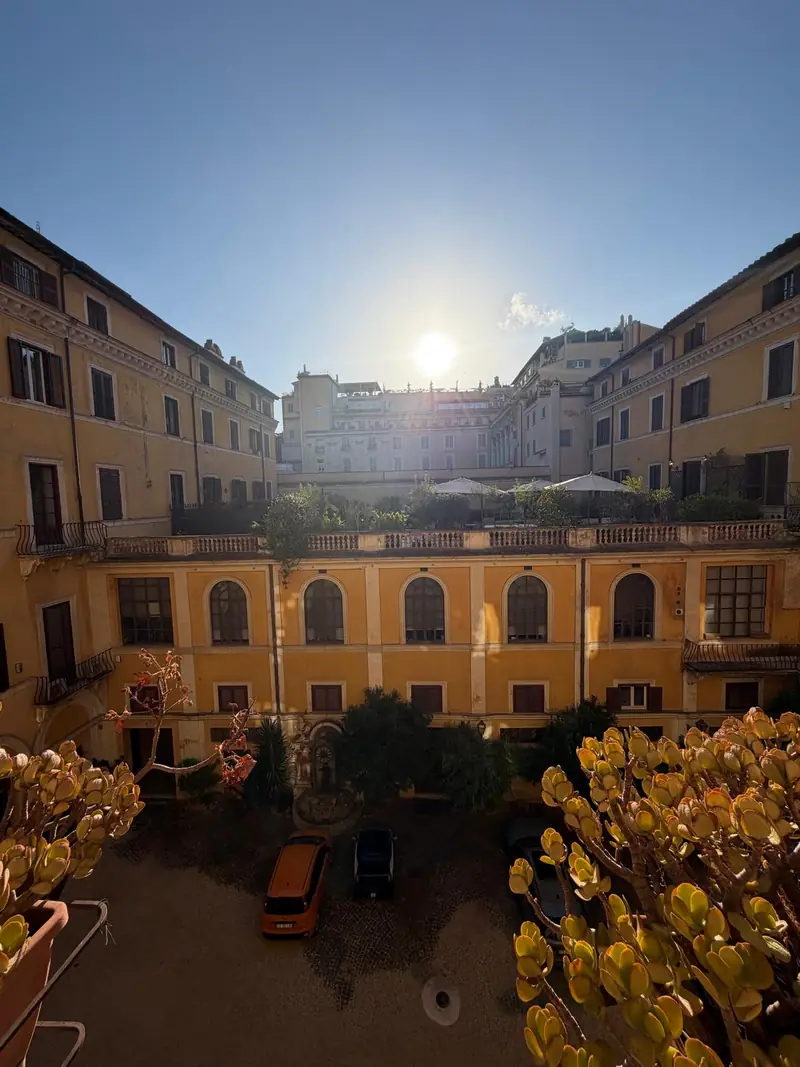
The apartment keeps the materials of the historic building it belongs to: terracotta floors inlaid with white geometric motifs, timber-beamed ceilings, panelled walnut doors and a carved stone fireplace. From the balcony, the view falls over an ochre courtyard with arched windows and roof gardens.